

Festreden zum Schwedenmahl 2026/Speeches at the Schwedenmahl Banquet 2026
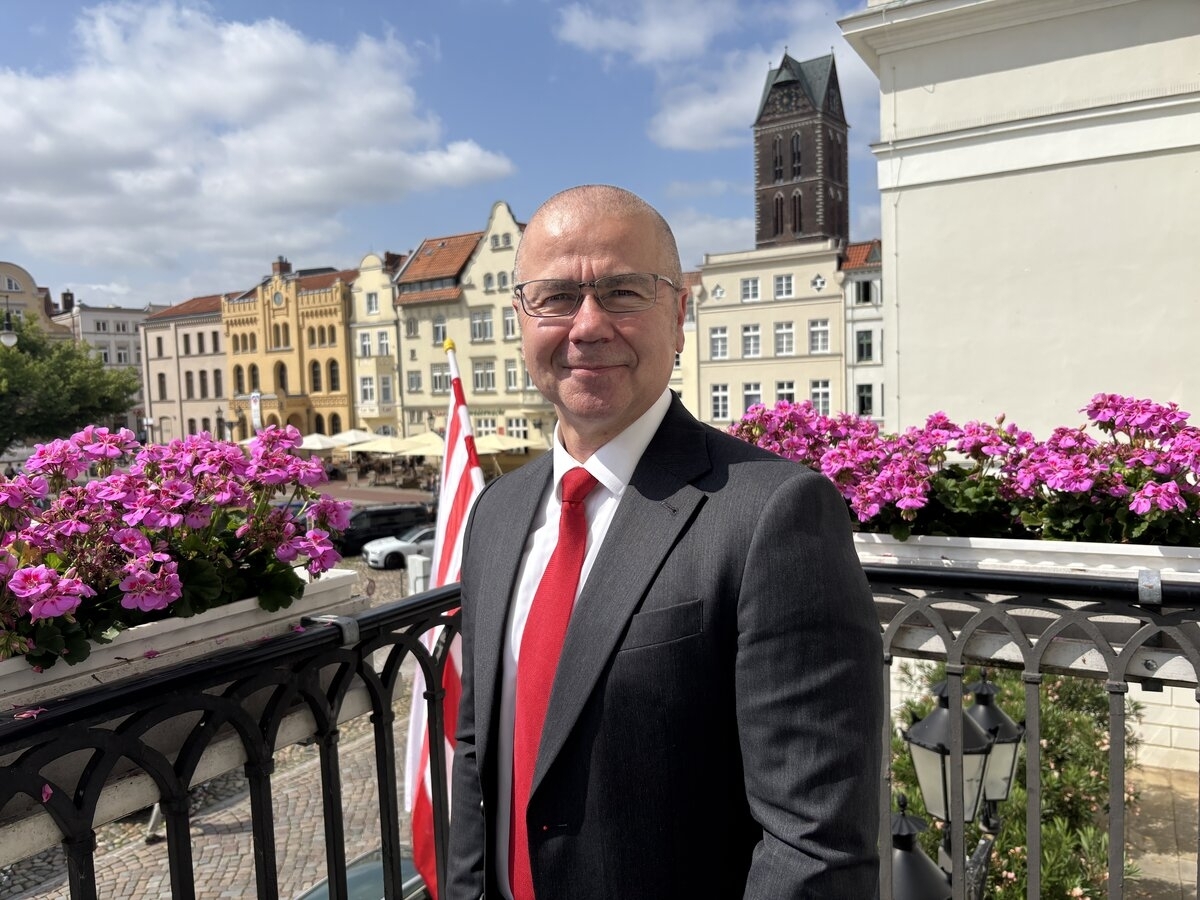
Frank Junge, Mayor of the Hanseatic City of Wismar (Speech in english language)
Dear Prime Minister Manuela Schwesig,
Your Excellency, dear Ambassador Veronika Wand-Danielsson,
Dear President of the State Parliament Birgit Hesse,
Dear Minister Dr Wolfgang Blank,
Dear State Secretary of the Swedish Government Christian Danielsson,
A very warm welcome to the Schwedenmahl banquet at our 25th Swedish Festival in the Hanseatic City of Wismar!
I would also like to extend a warm welcome to Simone Borchardt and Katrin Zschau, Members of the German Bundestag,
Tilo Gundlack and Daniel Peters, Members of the State Parliament, my fellow mayor from Kalmar, Johan Persson,
Arica Kopp, Honorary Consul of the Kingdom of Sweden,
Sylvia Bartsch, President of the Wismar City Council, and the members of the Wismar City Council who are present here today.
Thank you for joining us this evening.
I would like to extend a very special welcome to our guests from our twin towns of Lübeck, Kemi, Pogradec and Kalmar! Your presence is especially appreciated because it is you, in particular, who lend our festival its international spirit.
This applies, of course, particularly to our Swedish friends. After all, a Swedish festival in Wismar without any Swedes would be – well – an absolute no-go. So, exclusively for you: Hej hej, kära vänner!
Your Excellency, Ambassador Wand-Danielsson:
I am deeply honoured by your presence once again at our Swedish Festival. As the Kingdom of Sweden’s highest-ranking representative in Germany, you are thereby showing great appreciation for our Hanseatic city, for which I offer my heartfelt thanks. I am well aware that, in terms of protocol, there is not much room for manoeuvre here. Unless, of course, we would indeed reach royal spheres. Let’s please continue to work on this together.
Ladies and gentlemen, I would, of course, like to extend an equally warm welcome to the representatives from business, politics neighbouring municipalities, the university, public authorities, associations, societies, chambers of commerce, foundations, clubs, the church, the cultural sector and voluntary work.
However, so as not to strain the entertainment value of this speech too much right from the welcome, please allow me to welcome you all together now.
It’s a great pleasure to spend this evening together!
Dear guests, if we take a completely objective historical view, what we organise here in Wismar every August is actually a rather remarkable event:
A town is occupied during the Thirty Years’ War.
It comes under Swedish rule and remains so for quite a long time.
A century and a half later, someone here comes up with the idea of turning it into a festival. Not just any festival, but what has now become the largest Swedish-themed festival outside the Kingdom! That, I think, says a lot about us, the people of Wismar.
Above all, however, it shows that history cannot be changed. How we deal with it, what lessons we learn from it, and which shared values we allow to shape the way we live together – that is very much in our hands! That is how we ensured that occupiers became neighbours, and neighbours finally became friends. What began with cannons all those years ago now brings us together today. That is truly a good reason to celebrate together here in the nave of St George’s Church, festively decorated in blue and yellow.
Ladies and gentlemen, for me personally, this evening is special for yet another reason.
I have been mayor of this wonderful Hanseatic city for not even five weeks. That makes me proud, and I remain deeply grateful for the trust that the people of Wismar showed me in the April election. And just as I was setting out to familiarise myself with and fulfil the duties of this office, I now have the honour of standing in front of you as the host of this Schwedenmahl dinner, which is, moreover, part of the 25th anniversary edition of our unique Swedish Festival. I must admit: it all still feels a bit surreal to me. But since that is the way it is, as the new mayor, I’m simply going to take this opportunity to do something that’s important to me.
Dear Thomas Beyer, I’d like to thank you!
For 16 years, as mayor, you have been involved in organising and shaping this Swedish Festival alongside the staff of our city council. The fact that it has become one of the major folk festivals in northern Germany is largely down to your efforts. Even the preparations for this anniversary edition, which I now have the honour of leading, are entirely down to you. Yet you never viewed the Swedish Festival as merely an official duty. For you, it was a matter close to your heart.
Far beyond the Swedish Festival, during your years as head of our city, you set the course for the development of our Hanseatic city, ensuring that Wismar is fit for the future. Above all, however, you stand out for the clear commitment you have shown to our democracy and the values of our Basic Law. You have never shied away when things got difficult. You have always taken a firm stand against exclusion and discrimination and established Wismar as a curious, tolerant and cosmopolitan city. This attitude has earned recognition far beyond the city’s borders. All of this will bind you closely to our Hanseatic city. Dear Thomas, from the bottom of my heart: thank you for that!
I now have the honour of holding this office. And we all know that these are not easy times. This is the case in terms of security policy, the economy and society as a whole. Nevertheless, I remain confident. For us Hanseatics, throughout our long history, we have time and again found ways to cope with change and challenges.
Our shipyard is a very recent example of this. There is hardly any sector of the economy that is as deeply embedded in our city’s DNA as shipbuilding and the maritime industry – and hardly any that has experienced so many ups and downs over the past few decades. The fact that ‘our shipyard’ now once again has good, long-term prospects at TKMS and that new jobs are being created there is therefore anything but a foregone conclusion. The changed security situation has also contributed to this development. However, one crucial factor preceded this: the determination of the people of Wismar to stand behind their shipyard and help it through even the most difficult times. Our city and the state government in Schwerin have always been in agreement on this and have fought together to preserve shipbuilding and technical expertise here and in Mecklenburg-Western Pomerania. And with success: today, the order books are full, TKMS is growing – and with it come added value, jobs and new prospects for the whole region.
Many other businesses in Wismar and the surrounding region are also coping well with the current economic crisis. They are resisting the trend and expanding their presence in international markets. This brings us to something that has shaped our city for centuries. Even the Hanseatic League was based on people trading across borders, building connections and organising shared interests. Internationalism is therefore not just a modern label for Wismar. It is part of our history – and it is part of our future.
That is precisely why our Swedish Festival is far more than just a commemoration of a historical era. It fosters encounters and brings people from different countries together in conversation. We are becoming particularly aware this year of just how valuable that is. For the guests from our Ukrainian twin town, Chornomorsk, are unable to be with us today. The criminal Russian war of aggression continues to dominate everyday life there. Constant drone and missile attacks, destruction, concern for human lives and everything that has to be dealt with there make it impossible to visit Wismar at present. I very much hope that the day of peace will come soon and that our Ukrainian friends will once again be able to visit Wismar without any hesitation. However, this peace will not come about if we allow the aggressor, Putin, to continue.
That is why Germany and all of us in Europe have a responsibility to support Ukraine so that it can once again live in freedom and self-determination. That is why the practical assistance provided directly by Kalmar, Wismar and so many other European cities, dear Mayor Johan Persson, is more than just a gesture. On the scale of global politics, this may seem small. But our European solidarity begins precisely where people stand up for one another across borders and offer each other practical help. That is international understanding in action. This embodies much of what Europe stands for: solidarity, human dignity, mutual respect, openness and respect for our diversity.
Dear Swedish friends, we are truly delighted to have you back with us. After all, we have a lot in common. By that I certainly do not mean only that both our football teams were knocked out at round of 32 of the FIFA World Cup. One need not look for similarities only where it hurts. We are linked by close economic, cultural and political ties, and by many personal friendships. Above all, however, we share a common future in Europe. This future also depends on us keeping the lines of communication open and nurturing our partnerships. The coming days will offer plenty of opportunities for this – and I am very much looking forward to it.
Ladies and gentlemen, a festival of this scale requires many people to plan, organise and carry it out – and occasionally to improvise, without the guests even noticing. I would therefore like to thank the staff of our Hanseatic city, who have prepared this 25th Swedish Festival with the utmost dedication and are ensuring that it runs smoothly.
I would also like to extend my heartfelt thanks to our donors and sponsors. This Schwedenmahl banquet, too, would not be possible in this form without support. That is why I would like to extend my special thanks today to the Sana Hanse-Klinikum Wismar.
Dear guests, to conclude, here is a practical tip: To ensure that you can understand the speech later on by my fellow mayor from Kalmar, Johan Persson – at least those of you who still have room for improvement in your Swedish – you will find a card with a QR code on your table. If you scan it, you’ll find a translation of his speech. Please feel free to take the card with you afterwards. We’ll also be using the second QR code to provide you with photos from the entire festival.
And in a moment, we can all look forward to the music of the Swedish musician Viveca Lindhe.
Ladies and gentlemen, generations ago, the Swedes and the people of Wismar faced each other with weapons.
Today, we raise our glasses together.
I think that’s a far better option.
Here’s to our friendship!
Here’s to Europe!
And here’s to a wonderful 25th Sweden Festival!
Skål!
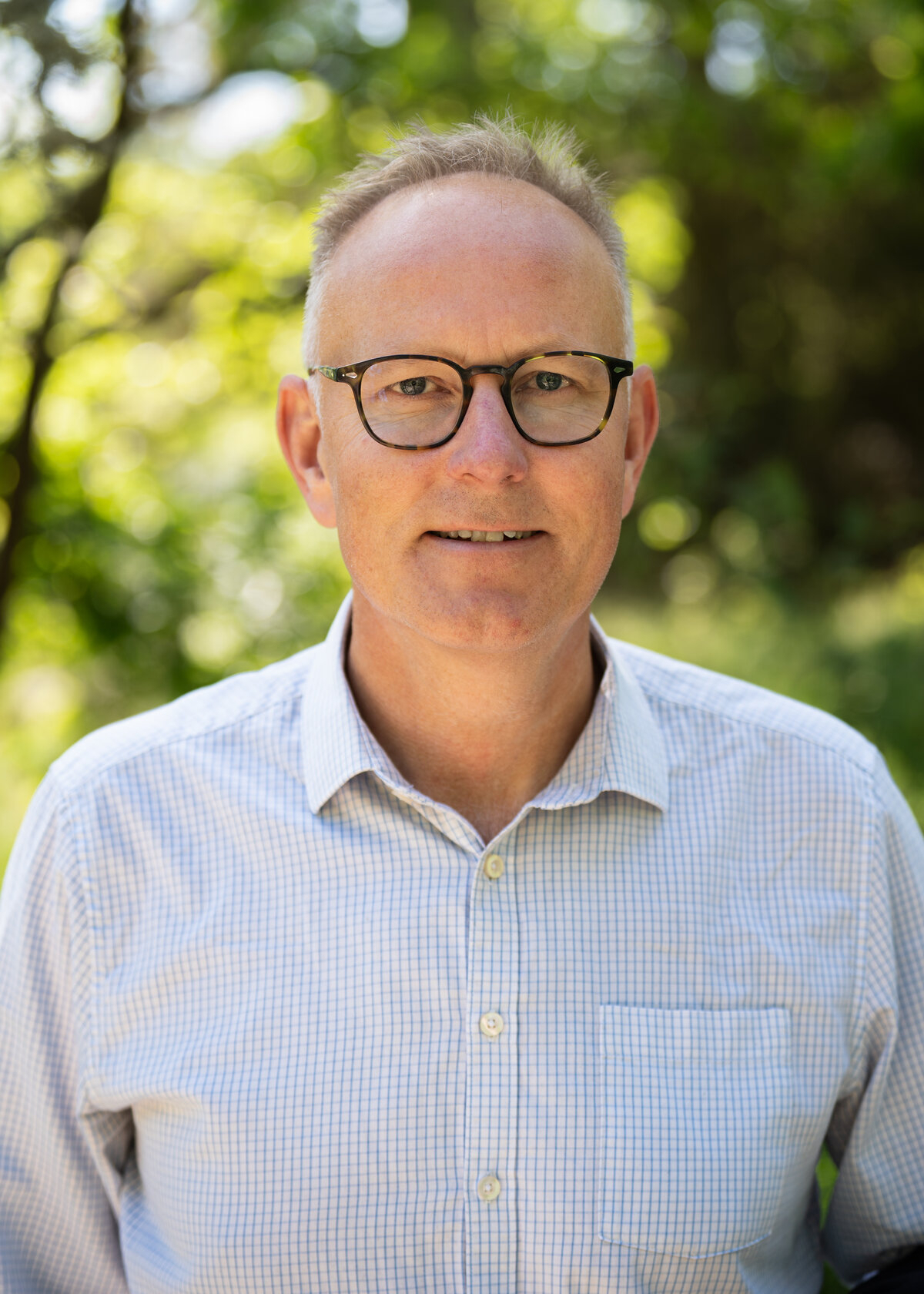
Johan Persson, Bürgermeister von Kalmar (Rede in deutscher Sprache)
Meine Damen und Herren, liebe Freunde,
Herr Bürgermeister und werter ehemaliger Bürgermeister Thomas Beyer, vielen Dank für die langjährige Zusammenarbeit und Freundschaft.
Ich hoffe auf eine ebenso enge Zusammenarbeit mit Ihnen, Frank Junge. Ich habe die Wahlen in Wismar mit Spannung verfolgt. Ich beneide Sie um die hiesigen langen Amtszeiten und das Wahlergebnis von 68,2 Prozent. Das werde ich bei den schwedischen Wahlen in wenigen Wochen nicht erreichen. Selbstverständlich möchte ich die Gelegenheit nutzen, Sie nach Kalmar einzuladen. Es wäre mir eine Ehre, Ihnen unsere Stadt zu zeigen.
Es freut mich ganz besonders, auch endlich an einem Schwedenfest teilnehmen zu können. Es hat sich all die Jahre mit unserem großen Ironman-Wettbewerb in Kalmar überschnitten. Dieses Jahr lockte der Wettbewerb die Weltelite an. Athleten aus 70 Ländern nahmen daran teil.
In diesen für Europa so unruhigen Zeiten ist der Austausch zwischen Städten umso wichtiger. Ich weiß, dass Wismar auch eine Partnerstadt in der Ukraine hat.
In Kalmar arbeiten wir eng mit der Stadt Poltawa zusammen. Die in Kalmar ansässige Organisation "Power up Ukraine" sammelt Spenden und liefert Fahrzeuge und Generatoren in die Ukraine. Die Regierungsgebäude in Kiew sind nun mit von "Power up Ukraine" gespendeten Generatoren ausgestattet. Zusätzlich wurden 86 Fahrzeuge gespendet. Die Gemeinde Kalmar hat Poltawa sowohl Generatoren als auch ein Feuerwehrauto gespendet.
Jetzt ist es wichtig, dass Europa zusammenhält und seine Zusammenarbeit verstärkt. Gemeinsam sind wir stark.
Wismar und Kalmar verbindet nicht nur die Nähe zum Wasser, sondern auch die gemeinsame Geschichte als alte Hansestädte, das Engagement für Kultur und Gemeinschaft und nicht zuletzt: die Liebe zu lebendigen Stadtzentren und historischen Gebäuden.
Uns eint auch der Eifer, unsere Städte stetig weiterzuentwickeln. Wir sollten stolz auf unsere Geschichte sein, aber wir können nicht in einem Museum leben. Ich freue mich, dass beide Städte in Hochschulbildung mit Universitäten investiert haben. Dies legt den Grundstein für zukünftiges Wirtschaftswachstum.
Kalmar ist vielleicht am bekanntesten für sein Schloss, seine Rolle in der Kalmarer Union – und, ehrlich gesagt, weil es hier oft etwas windiger ist, als der Wetterbericht verspricht.
Worauf wir aber vor allem stolz sind, ist unsere Offenheit. In Kalmar ist internationale Zusammenarbeit selbstverständlich und die Verbindungen zu Freunden wie Wismar bedeuten uns sehr viel. Deshalb sage ich es noch einmal: Vielen Dank für die Einladung.
Wismar ist nicht nur eine Perle an der Ostsee. Es ist auch eine Stadt, die viele von uns durch die Freundschaft und die enge Verbundenheit, die sich zwischen unseren Städten entwickelt hat, auf einer tieferen Ebene kennen.
Städtebeziehungen sind etwas Besonderes. Es sind keine formalen Verbindungen, sondern lebendige Beziehungen.
Sie werden von Menschen gestaltet. Von Schulklassen, die Erfahrungen austauschen, von Vereinen, die zusammenarbeiten, von Freundschaften, die zwischen Menschen über Grenzen hinweg entstehen.
Deshalb möchte ich heute auch einem derjenigen, die unsere Zusammenarbeit ermöglichen und stärken, ganz besonders danken. Man könnte ihn einen Botschafter für Wismar und Kalmar nennen. Ich denke an Olaf Heilig. Er war all die Jahre eine treibende Kraft in der Städtepartnerschaft.
Die Geschichte hat gezeigt, dass unsere Städte – unsere Länder – mehr als nur Geografie, verbindet. Wir teilen Werte. Wir teilen den Glauben an Zusammenarbeit, Offenheit und Frieden.
Daher nochmals herzlichen Dank für dieses Abendessen. Für Ihre Großzügigkeit. Für Ihr Engagement und Ihre Herzlichkeit.
Doch Freundschaft entsteht nicht von selbst. Sie braucht Pflege. Sie braucht Gespräche, Neugier und den Willen, einander zu verstehen.
Ein Hoch auf die Freundschaft unserer Städte!
Johan Persson, Mayor of Kalmar (Speech in english language)
Ladies and gentlemen, dear friends,
Mr. Mayor,
dear former Mayor Thomas Beyer,
thank you very much for your many years of collaboration and friendship.
I look forward to working just as closely with you, Frank Junge. I followed the elections in Wismar with great interest. I envy you the long terms of office here and the election result of 68.2 percent. I won’t achieve that in the Swedish elections in a few weeks. Of course, I’d like to take this opportunity to invite you to Kalmar. It would be an honor for me to show you our city.
I'm especially pleased to finally be able to take part in a Swedish festival. All these years, it has conflicted with our big Ironman competition in Kalmar. This year, the competition attracted the world's elite. Athletes from 70 countries took part.
In these turbulent times for Europe, exchanges between cities are all the more important. I know that Wismar also has a sister city in Ukraine.
In Kalmar, we work closely with the city of Poltava. The Kalmar-based organization "Power up Ukraine" collects donations and delivers vehicles and generators to Ukraine. The government buildings in Kyiv are now equipped with generators donated by "Power up Ukraine". In addition, 86 vehicles have been donated.
The municipality of Kalmar has donated both generators and a fire truck to Poltava.
Now it is important for Europe to stand together and strengthen its cooperation. Together, we are strong.
Wismar and Kalmar are connected not only by their proximity to the water, but also by their shared history as ancient Hanseatic cities, their commitment to culture and community, and, last but not least, their love for vibrant city centers and historic buildings.
We are also united by our commitment to the ongoing development of our cities. We should be proud of our history, but we cannot live in a museum. I am pleased that both cities have invested in higher education through their universities. This lays the foundation for future economic growth.
Kalmar is perhaps best known for its castle, its role in the Kalmar Union – and, to be honest, because it’s often a bit windier here than the weather forecast predicts.
But what we’re most proud of is our openness. In Kalmar, international cooperation is a given, and our ties to friends like Wismar mean a great deal to us.
That is why I would like to say it once again: Thank you very much for the invitation.
Wismar is not just a pearl on the Baltic Sea. It is also a city that many of us know on a deeper level thanks to the friendship and close bond that has developed between our cities.
City partnerships are something special. They are not merely formal ties, but living relationships.
They are shaped by people – by school classes sharing experiences, by organizations working together, and by friendships that cross borders.
That is why today I would also like to extend a very special thank you to one of those who make our collaboration possible and strengthen it. You could call him an ambassador for Wismar and Kalmar. I am thinking of Olaf Heilig. He has been a force behind the town twinning all these years.
History has shown that our cities – our countries – are connected by more than just geography. We share values. We share a belief in cooperation, openness, and peace.
So, once again, thank you very much for this dinner. For your generosity. For your dedication and your warmth.
But friendship doesn’t just happen on its own. It needs to be cultivated. It requires conversation, curiosity, and the willingness to understand one another.
Here’s to the friendship between our cities!
Quelle: Pressestelle der Hansestadt Wismar